
Organizations invest heavily in master data management, yet many MDM initiatives fail to deliver consistent results.
The issue is rarely the MDM platform itself. More often, it stems from poor data quality, where data is incomplete, outdated, or inconsistent across systems.
Master data management platforms coordinate governance, workflows, and stewardship, but they still depend on trusted reference data to operate correctly.
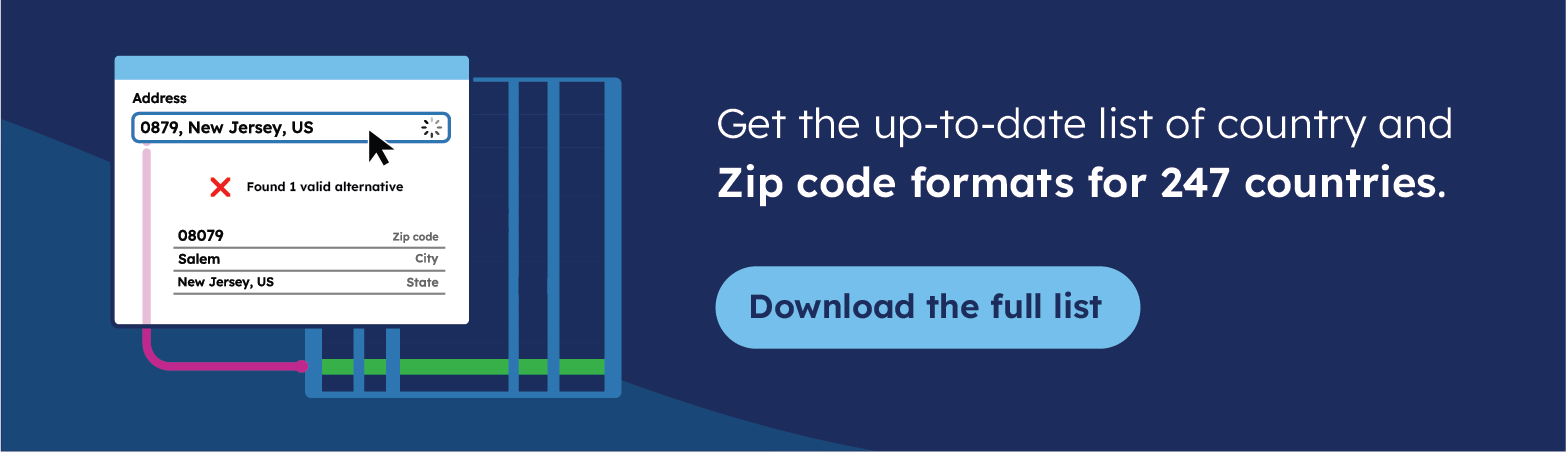
Reference data defines the external values systems use to validate and interpret records consistently. Location data is one of the most critical reference data domains.
Postal codes, administrative divisions, boundaries, and coordinates underpin validation, reporting, taxation, and logistics. When this foundation is weak, inconsistencies propagate across systems.
This article compares leading providers involved in location data and master data management, focusing on location data within MDM architectures and clarifying where MDM platforms end and where reference data begins.
Master data management vs reference data management (MDM vs RDM)
Master data management and reference data management solve related but distinct problems.
Master Data Management (MDM) platforms manage:
- Governance workflows
- Golden record creation
- Stewardship processes
- Cross-system synchronization
Reference Data Management (RDM) provides:
- Authoritative datasets
- Standardized records used across systems
- Reliability and consistency over time
Location data belongs to reference data. ZIP codes, administrative divisions, boundaries, and coordinates define how all systems interpret “place.” MDM platforms consume this data but do not create it.
A successful MDM architecture combines:
- An MDM hub to govern records
- A reference data layer to define data truth
This article evaluates providers through that lens.
Types of data used in master data management
MDM programs typically govern several data domains.
Customer master data
Customer records include names, addresses, and identifiers. Location data determines address validity, regional segmentation, reporting, and compliance.
Product master data
Product master data defines Stock Keeping Units (SKUs), attributes, and classifications. Location data influences market availability, taxation, and logistics rules.
Supplier master data
Supplier master data defines supplier identities, attributes, and relationships. Location data supports supplier onboarding, risk assessment, regulatory checks, and procurement processes.
Financial master data
Financial master data defines accounts, legal entities, and reporting structures. Location data enables tax jurisdiction mapping, financial reporting alignment, and regulatory compliance.
Location master data (focus of this article)
Location data defines countries, administrative divisions, postal codes, cities, boundaries, and coordinates. This data acts as a shared source of truth across all other domains.
This comparison focuses exclusively on location data within master data management.
Evaluation criteria for location data in MDM
The comparison uses five criteria relevant to enterprise MDM programs:
- Role in MDM architecture: Tool, data layer, or enrichment service
- Location data coverage and accuracy
- Update frequency and governance model
- Integration model: on-premise, cloud, or hybrid
- Enterprise scalability
Summary comparison table: location data providers for MDM
| Provider | Role in RDM | Location Coverage | Integration Model | Best For | Key Considerations |
|---|---|---|---|---|---|
| GeoPostcodes | Reference location data layer | Guaranteed global, 247 countries with deep administrative coverage | Self-hosted, integrates with any RDM platform | Global RDM foundations, ERP/CRM and analytics | Not an RDM platform itself; technical integration required |
| Melissa | Data quality and validation layer | Global | Native integration with Semarchy and Profisee MDM platforms | Customer-centric RDM | Native integration is tightest with Semarchy and Profisee; product set centers on contact and address quality |
| Experian | Customer data hub and RDM | Global, with customer-focused location enrichment | Platform-based | Customer and marketing data | Customer-data hub focus; limited access to the location reference data |
| InfobelPRO | Business and POI data provider | Global POI and business entities | On-premise via flat files | B2B enrichment | On-premise flat-file delivery; POI and business intelligence focus rather than postal or boundary reference data |
Best location data providers for master data management
GeoPostcodes
GeoPostcodes provides comprehensive global reference location datasets designed to support master data management initiatives.
The datasets cover 247 countries, including hard-to-source geographies such as China, Japan, and Brazil, and include postal codes, addresses, administrative divisions, boundaries, and population data curated from more than 1,500 authoritative sources.
GeoPostcodes supports enterprises such as MSC and DB Schenker in centralizing and validating location master data, improving accuracy and consistency across systems while reducing operational costs.
The data is delivered through a self-hosted model that integrates with any MDM platform and gives organizations full control over security, compliance, and performance.
GeoPostcodes is not an MDM tool and serves as the reference location data layer embedded within MDM architectures.

Melissa
Melissa provides address validation and data quality solutions, with a strong commercial offering across address verification, identity, email, and IP validation.
The solutions integrate natively with MDM platforms such as Semarchy xDM and Profisee, where they function as a plug-in data quality layer within MDM workflows.
Melissa verifies, standardizes, and enriches customer contact data, including addresses, phone numbers, and emails, and supports real-time validation for customer-centric use cases.
Melissa focuses on contact and address quality and customer data enrichment, and does not provide a full global reference location dataset.
Compared to Melissa, GeoPostcodes provides standardized location reference data across 247 countries, designed for long-term MDM consistency.
Experian
Experian offers an MDM solution built on its established data quality and enrichment capabilities. The platform centralizes customer engagement and demographic data, manages hierarchies, and shares master data across applications.
Address quality and enrichment improve downstream analytics and reporting for customer-centric MDM initiatives.
Experian’s solution functions as a customer data and data quality hub, with deep capabilities in customer engagement, identity, and demographic enrichment, rather than a classic multi-domain MDM platform.
Compared with Melissa, Experian focuses on customer data enrichment and quality workflows worldwide.
Compared to Experian, GeoPostcodes focuses on defining and maintaining the underlying global location data structure used across all MDM domains.
InfobelPRO
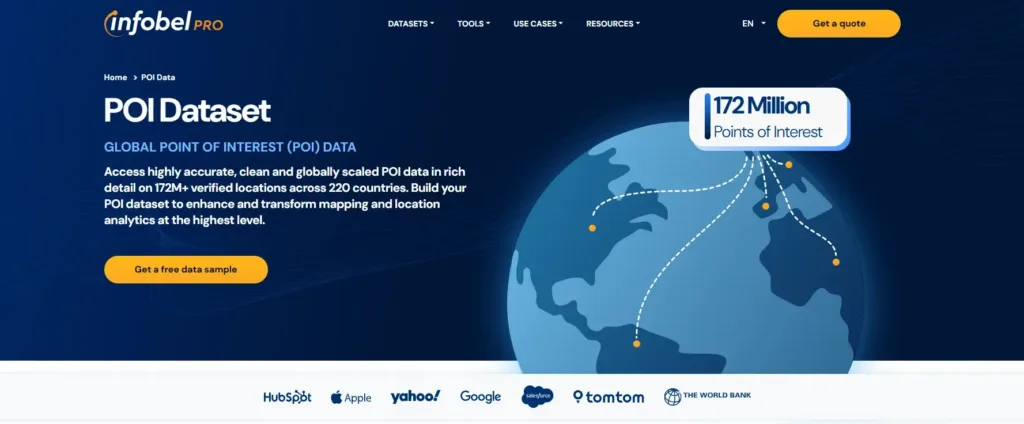
InfobelPRO is a large-scale commercial POI and business intelligence data provider, offering more than 160 million points of interest across 200 countries.
The datasets enrich CRM and MDM systems with business entity and commercial location intelligence and are integrated through flat files and on-premise delivery.
InfobelPRO is commonly used to complement MDM programs with external B2B and POI data.
The provider is not an MDM hub and does not focus on standardized global reference location datasets such as postal codes, administrative hierarchies, or boundaries.
Compared with Experian and Melissa, InfobelPRO enriches MDM systems with commercial and POI context.
Compared to InfobelPRO, GeoPostcodes delivers the foundational reference location data that structures and anchors those enrichments.
Where GeoPostcodes fits in an MDM architecture
GeoPostcodes follows a clear positioning:
- GeoPostcodes is not an MDM tool
- GeoPostcodes provides reference location databases
- The data is embedded into ERP, CRM, BI, and MDM systems
- Teams “set, embed, and forget” location data
This positioning ensures stable, governed location truth while MDM platforms focus on workflows and stewardship.
How to choose a location data provider for master data management
Organizations evaluating location data for MDM benefit from asking five questions:
- Does the provider deliver authoritative reference data or validation services?
- Does coverage support global operations, not only North America?
- How often is the data updated and governed?
- Can the data be self-hosted for security and performance?
- Does the provider integrate cleanly with existing MDM platforms?
The answers determine whether location data strengthens or weakens the MDM foundation.
Final takeaway
Master data management initiatives succeed when governance and workflows rest on stable foundations.
MDM platforms provide the structure to manage records, enforce rules, and align systems, but they do not define the external realities those records depend on. Location data is one of those shared realities.
For organizations operating across multiple countries, location data must remain consistent, authoritative, and continuously maintained.
When that responsibility sits inside an MDM tool or is handled through fragmented validation services, inconsistencies inevitably surface across customer, supplier, logistics, and reporting domains.
A more resilient approach separates concerns. MDM platforms govern master records, while a dedicated reference data layer defines location truth once and distributes it everywhere.
Embedding authoritative global location data directly into the MDM architecture reduces operational friction, improves data consistency, and allows teams to focus on stewardship rather than maintenance.
That distinction between managing master records and defining a reference source of truth plays an important role in how well an MDM program performs over time.
When reference data responsibilities are clearly separated and properly managed, organizations reduce one major source of inconsistency, making it easier for governance, workflows, and stewardship efforts to scale without accumulating unnecessary complexity.
FAQ
What is master data management, and why is it important?
Master data management is the process of organizing, governing, and synchronizing master data across systems.
Master data includes core entities such as customers, suppliers, products, locations, and accounts.
Strong master data management ensures consistent master data, improves data quality, and supports reliable business processes across the enterprise.
Master data management aligns definitions and ownership, so each master data record remains accurate and usable across applications.
Without master data management, inconsistent master data disrupts reporting, analytics, and operational performance.
What is master data, and how is it different from reference data and transactional data?
Master data represents core business entities that multiple systems use repeatedly, such as customers or products.
Reference data defines allowed values, such as country codes or classifications, while transactional data records events such as orders or invoices.
In other words, master data describes the core business objects, reference data defines controlled values, and transactional data captures activity.
Effective master data management ensures both master data and reference data support accurate reporting and stable business processes.
How does master data management support core business entities?
Master data management ensures that every master data record for customers, products, and locations remains consistent across systems.
This alignment prevents duplication and improves data integration between platforms such as enterprise resource planning and customer relationship management systems.
By maintaining master data in a governed framework, organizations protect data accuracy and reduce operational risk.
Master data management also strengthens data governance by assigning ownership and approval workflows to each master data record.
What is the role of master data management solutions in enterprise systems?
Master data management solutions centralize and standardize master data across departments.
These master data management solutions provide validation rules, workflows, and synchronization tools to distribute consistent master data across systems.
Modern master data management software integrates with enterprise applications to ensure master data remains accurate during daily business processes.
Strong master data management solutions reduce duplication and simplify maintaining master data over time.
How are master data management and data governance connected?
Master data management depends on structured data governance policies to define roles, validation controls, and audit procedures.
Data governance ensures that master data is maintained consistently across departments.
Without governance, master data becomes fragmented, weakening data quality and disrupting business processes.
Master data management solutions often embed governance controls directly into master data management software to ensure consistent master data.
How does master data management improve business processes and data integration?
Master data management improves business processes by ensuring that every system uses the same trusted master data.
Standardized master data reduces reconciliation errors between finance, supply chain, and customer relationship management systems.
Accurate master data simplifies data integration because shared identifiers remain aligned across platforms.
This consistency improves operational efficiency and strengthens enterprise reporting.
What challenges do organizations face when maintaining master data globally?
Maintaining master data across regions increases complexity due to different regulatory requirements, languages, and administrative structures.
Inconsistent master data records across systems can disrupt reporting and customer relationship management workflows.
Master data management software helps harmonize master data globally, but organizations must still define ownership and validation standards.
Without a structured master data management system, maintaining master data can become resource-intensive.
What tools and master data management software support effective master data management?
Organizations use master data management software, data catalogs, and automated validation tools to manage master data efficiently.
Master data management software supports the creation, updating, and synchronization of each master data record across applications.
Advanced master data management solutions provide workflow automation, version control, and integration connectors.
These capabilities simplify maintaining master data and ensure consistent master data across all systems.
What are the benefits of strong master data management?
Strong master data management improves data quality, protects data accuracy, and ensures consistent master data across systems.
Reliable master data reduces operational risk and strengthens reporting.
Effective master data management also improves collaboration between departments by aligning master data definitions and business processes.
Organizations that invest in master data management solutions often experience smoother data integration and fewer reconciliation issues.
How is master data management evolving in modern data environments?
Modern master data management increasingly relies on automation, centralized governance models, and scalable master data management software.
Cloud-based master data management solutions now integrate directly with enterprise systems, including customer relationship management platforms.
These innovations simplify maintaining master data and distributing consistent master data across global operations.
As business processes become more digital, master data management continues to play a central role in protecting data quality and operational stability.