
Introduction
Address autocomplete supports critical processes in checkout flows, onboarding forms, delivery apps, and enterprise address validation. Most users searching for “address autocomplete” encounter APIs that hide the underlying dataset powering suggestions. This creates a misconception: autocomplete is not only an API feature. High-quality autocomplete depends on three pillars: the dataset, the matching logic, and the delivery model.
This comparison clarifies the landscape by evaluating leading autocomplete providers and highlighting the role of standardized, authoritative datasets in achieving reliable international address entry.
Comparison table: Best address autocomplete solutions
| Provider | Coverage | Delivery Model | Multilingual Support | Best For | Key Limitations |
|---|---|---|---|---|---|
| GeoPostcodes | 247 countries, 299 languages, guaranteed coverage | Self-hosted | Full | Custom address autocomplete, global UX, advanced data enrichment | Not plug-and-play |
| Google Maps Autocomplete API | Worldwide | API | Available across supported markets | Consumer-facing forms | Third-party API dependency; predefined response structure and parameters limit flexibility |
| OpenStreetMap | Worldwide, community-maintained | Self-hosted | Available where contributors have provided multilingual tags | Research, prototyping | Community-driven structure; teams typically standardize the data before integration |
| Smarty | Worldwide | API | Available within product-line scope | High-volume validation workflows | Third-party API dependency; no access to the reference data |
| Melissa | Worldwide | API and limited self-hosted possibilities | Available across address verification products | CRM, e-commerce, MDM integrations | API delivery; access to the underlying reference data sits behind the platform |
| Loqate | Worldwide | API | Available across supported commerce markets | E-commerce and checkout integrations | API delivery; predefined response structure and configuration parameters |
What is address autocomplete?
Address autocomplete refers to real-time suggestions that appear as the user types. The system analyzes partial input and returns possible address candidates that align with local postal structures. Autocomplete improves form speed, reduces typos, and increases completion rates in onboarding flows, checkout steps, and delivery apps. Teams rely on autocomplete because it decreases user friction and minimizes downstream errors caused by inconsistent or incomplete address entry.
High-quality autocomplete depends on the accuracy and structure of the underlying dataset. Suggestions require correct city names, validated postal codes, and consistent administrative divisions to produce meaningful results. If the dataset contains gaps, inconsistencies, or unstandardized formats across countries, the autocomplete output becomes unreliable. This challenge mirrors the issues faced by companies such as Bark and Rosa, which experienced signup friction until they adopted curated reference data.
Autocomplete depends on three components:
- The dataset – the foundational element containing addresses, cities, postal codes, administrative hierarchies, and naming conventions across all geographies. A standardized dataset improves city ranking, reduces false positives, and supports multilingual search across 299 languages.
- The matching logic – the algorithm that interprets user input, ranks suggestions, and applies relevance rules. The logic determines whether the system prioritizes cities, postal codes, or streets depending on user experience needs and regional norms.
- The delivery model – the method that delivers the suggestions, either through a third-party API with variable latency or through the integration of a self-hosted dataset, leading to predictable performance and full data control.
Most autocomplete tools highlight API-first solutions, but the dataset quality ultimately defines the reliability of suggestions, especially for international use cases where address structures vary widely. A curated, standardized, and multilingual dataset enables more accurate suggestions and supports consistent user experiences across global markets.
Why dataset quality matters more than the API layer
Address autocomplete strength depends on whether the dataset:
- Covers all countries consistently
- Supports multi-language searches
- Provides standardized administrative hierarchies
- Reflects local address formats (233 formats globally)
- Contains geocoding, city rankings, and clean naming conventions
APIs can display suggestions, but they cannot correct weak or incomplete datasets.
Teams needing reliable global autocomplete, especially for marketplaces, logistics, or e-commerce, benefit most from self-hosted datasets because they allow:
- Custom ranking rules
- No latency
- No rate limits
- Full data control
- Custom fields for region-specific UX
- Ability to enrich suggestions with hierarchies and metadata
This distinction explains why many enterprise teams, such as DB Schenker or MSC, use GeoPostcodes as their enrichment location data layer while building their own UI and matching logic.
Best address autocomplete solutions
GeoPostcodes
GeoPostcodes provides enriched datasets for address autocomplete with standardized structures across 247 countries, unified address formats, and support for 299 languages. Teams use the self-hosted model to design fully customizable autocomplete flows with their own ranking logic, fields, and suggestion formats. GeoPostcodes differs from API-based solutions by offering complete data control and predictable pricing. Compared with OpenStreetMap, GeoPostcodes delivers authoritative, globally consistent datasets instead of crowdsourced records.
Google Maps Autocomplete API
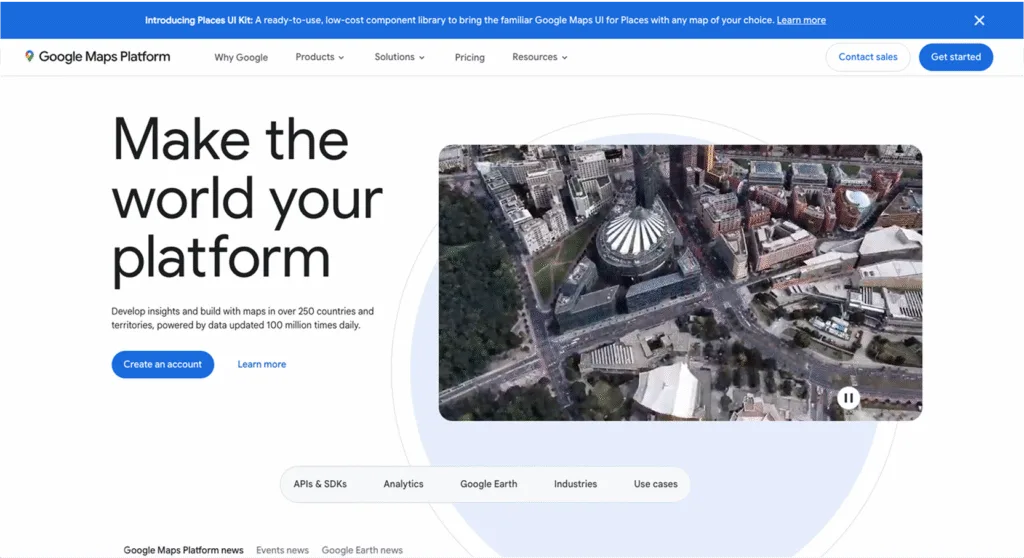
Google Maps Autocomplete API provides easy integration and a strong user experience for consumer forms, with widely adopted documentation and a smooth developer experience. The API is delivered as a cloud service across global markets, making it a common choice for fast integration. Compared to Google Maps Autocomplete API, GeoPostcodes provides standardized global formats and full data control through a self-hosted dataset. Compared with Smarty, the Google API offers a better-known brand.
OpenStreetMap
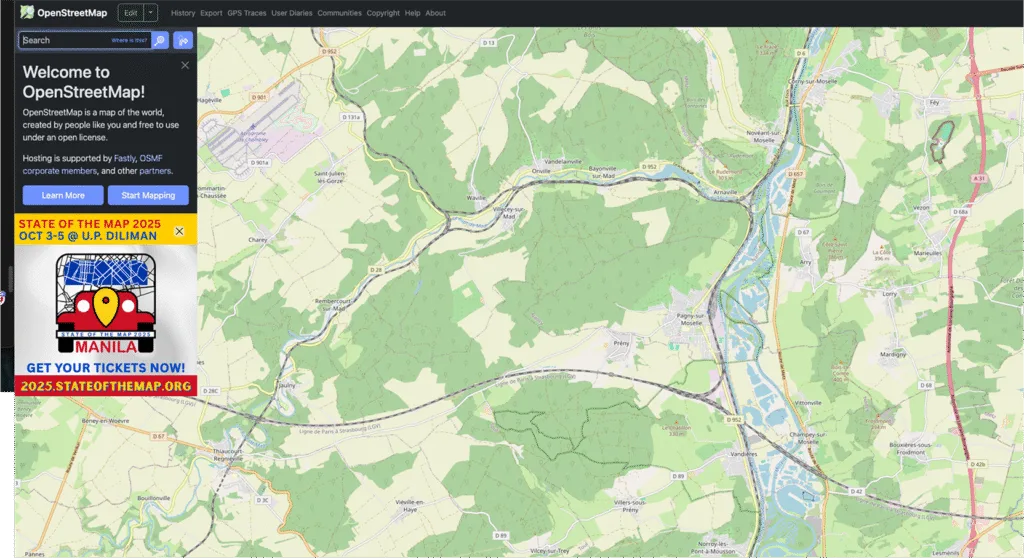
OpenStreetMap offers free, community-maintained geographic data with strong flexibility and accessibility through major cloud platforms. Coverage depth, formatting, and update frequency all vary by contributor and country. Compared to OpenStreetMap, GeoPostcodes provides authoritative, standardized datasets ready for global address entry. Compared to the Google Maps Autocomplete API, OpenStreetMap offers more data control and distributes raw geographic datasets, leading teams to build their own autocomplete logic on top.
Smarty
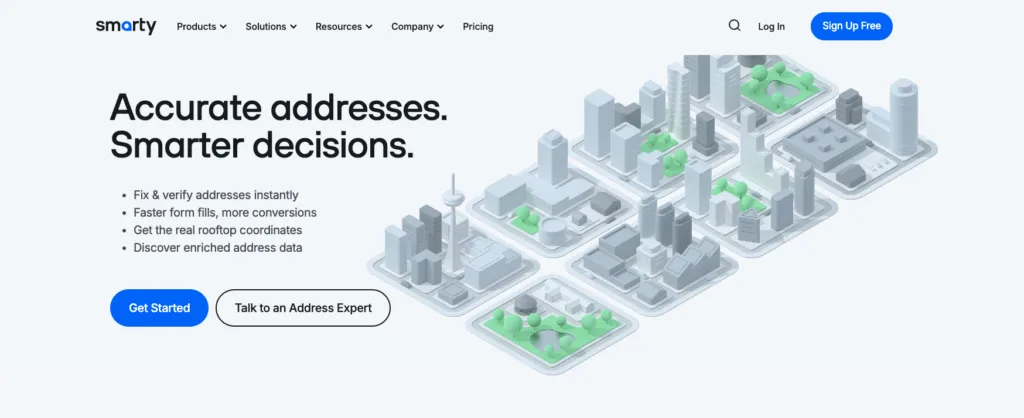
Smarty delivers fast address autocomplete with developer-friendly endpoints suited for high-volume workflows, and broad adoption across e-commerce, logistics, and CRM integrations. Compared to Smarty, GeoPostcodes offers unified address structures across 247 countries and robust multi-language support. Compared with Melissa, Smarty emphasizes speed and simplicity, while Melissa integrates more deeply with enterprise tools.
Melissa
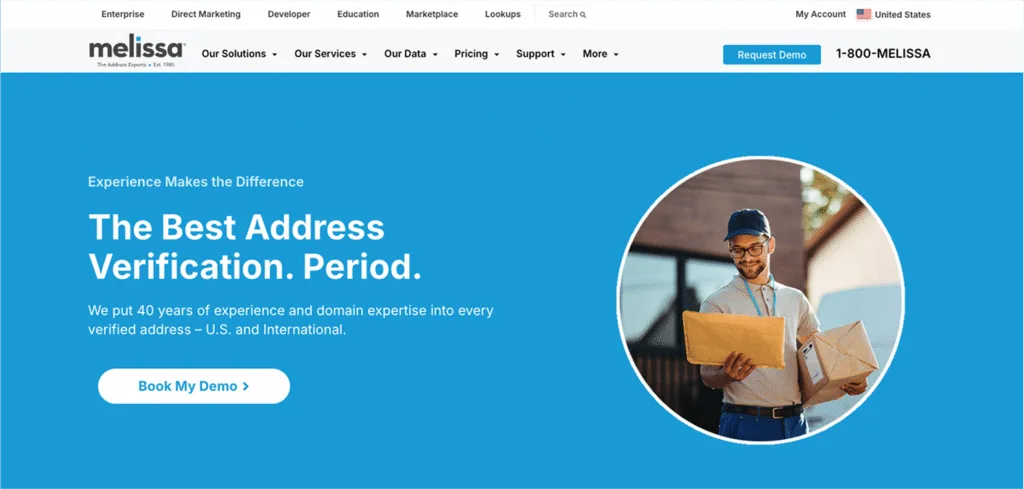
Melissa provides address autocomplete and data quality services, with broad integrations across CRM, MDM, and e-commerce platforms. The service is delivered through API-based products. Compared to Melissa, GeoPostcodes offers consistent global datasets with standardized formats suited for international address autocomplete. Compared with Loqate, Melissa emphasizes deeper enterprise integrations, while Loqate focuses on e-commerce and checkout flows.
Loqate
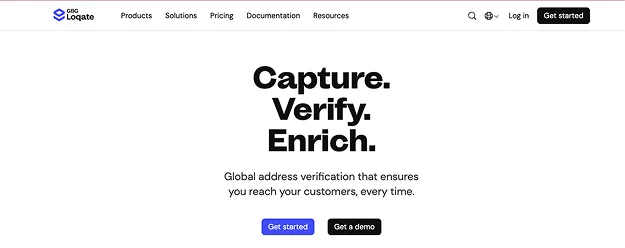
Loqate delivers address autocomplete solutions and offers wide integration options across e-commerce ecosystems. Compared to Loqate, GeoPostcodes provides authoritative datasets for 247 countries with consistent international address formats. Compared with the Google Maps Autocomplete API, Loqate emphasizes e-commerce and checkout integrations.
How to choose the best address autocomplete solution
Start with your coverage needs
Teams working internationally require consistent address structures, multilingual suggestions, and standardized administrative hierarchies across all markets. Providers with regional datasets perform well in domestic markets but create friction when users enter cities in multiple languages or when address formats vary. A global dataset like GeoPostcodes, covering 247 countries, prevents inconsistent records across regions and supports onboarding, logistics, and marketplace platforms that scale beyond their core markets.
Assess the dataset behind the autocomplete
The dataset determines the accuracy and relevance of each suggestion because address autocomplete ranks entries based on city names, administrative divisions, and address formats. Authoritative and standardized datasets reduce false positives and avoid mismatches between postal codes and cities. Crowdsourced or aggregated sources require cleaning, normalization, and reconciliation before they can support production-ready autocomplete. This challenge echoes the experience of teams such as Randstad and Rosa, who saw improvements only after adopting GeoPostcodes’ curated, structured datasets.
Clarify customization requirements
Address autocomplete must adapt to local conventions, business rules, and user experience constraints. API-first solutions restrict customization because the provider controls suggestion logic, ranking order, and which fields appear in the response. Self-hosted datasets give teams control over field definitions, and the display of city hierarchies. This flexibility helps teams deliver an autocomplete experience aligned with their product requirements, whether they prioritize city-first, street-first, or region-first suggestions.
Evaluate multilingual needs
International users type addresses in multiple languages and transliterations. A dataset like GeoPostcodes’ that supports 299 languages improves user experience because users can search for cities and addresses using local names, foreign alternatives, or English versions. Teams in multilingual markets, such as Belgium, where Rosa uses multilingual inputs across English, French, and Dutch, benefit from datasets that reflect real-world naming variations rather than relying on a single standardized spelling.
Consider the delivery model
API-based address autocomplete introduces latency, rate limits, and dependency on external infrastructure, which can create delays during peak traffic or high-volume registrations. Self-hosted datasets eliminate these constraints because teams run autocomplete logic internally with predictable performance. This approach supports systems such as marketplaces, e-commerce checkouts, and enterprise onboarding flows that process high query volumes and require stable performance.
Evaluate pricing predictability
Usage-based pricing can lead to unpredictable monthly costs because real-time address autocomplete generates a large number of requests. High-traffic applications risk exceeding budget targets when each keystroke triggers an API call. Self-hosted datasets like GeoPostcodes’ avoid this problem because pricing remains fixed regardless of volume. Teams gain stable cost structures that help product, engineering, and compliance teams plan long-term resources across regions and use cases.
Why teams choose GeoPostcodes as their autocomplete data solution
Enterprises choose GeoPostcodes because it provides enriched, globally standardized datasets that power accurate, multilingual address autocomplete across 247 countries. Teams gain full control over suggestion logic, ranking rules, and UI design because the data runs self-hosted. This approach eliminates rate limits, latency, and unpredictable usage costs. GeoPostcodes stands apart by providing authoritative sourcing, unified address formats, 299-language support, consistent administrative hierarchies, and enterprise-grade consulting, enabling teams to build reliable, flexible address autocomplete experiences at a global scale. Trusted by Fortune 500 companies and used across logistics, e-commerce, risk management, and marketplaces worldwide.